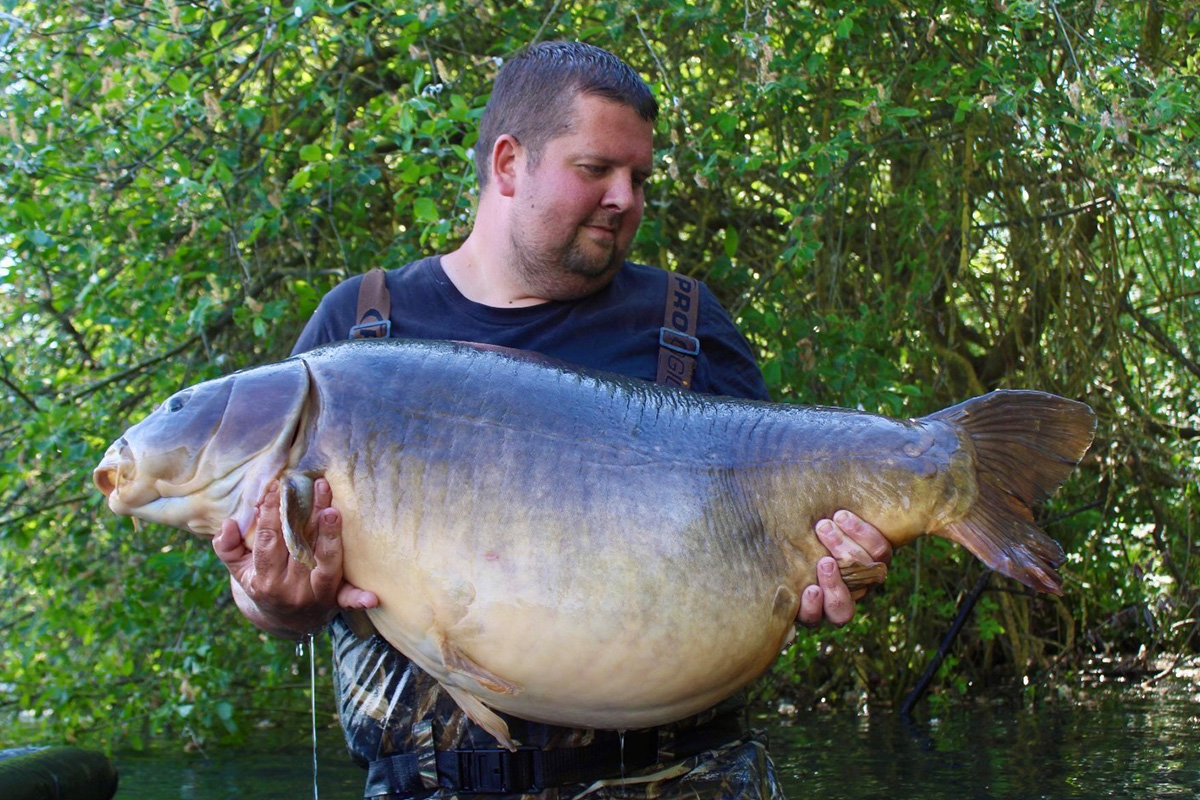
How to Approach a New Carp Water: Finding Spots & Fishing In Weed
There’s something exciting about arriving at a new lake for the very first time.
Equally, there’s something intimidating about it.
Every venue is different, and while social media can give you a glimpse of what lives beneath the surface, nothing replaces putting the time in yourself. That’s exactly how I approached Keer Lake on the Clearwater syndicate.
Coming from predominantly fishing busy day-ticket venues, where the biggest challenge was often finding an empty swim before thinking about the fishing itself, joining a large syndicate was a completely different experience.
Keer covers around 23 acres, with crystal-clear water, depths ranging from just a couple of feet to over 20 feet, and extensive weed growth throughout much of the lake. Straight away, I knew one thing would determine whether I caught consistently or not… spot finding.

It’s always exciting beginning a campaign on a new water
Why Spot Finding Is So Important
I genuinely believe many anglers don’t spend enough time looking for the right place to present a rig.
It’s easy to arrive, see a fish show and simply cast in its direction, hoping for the best. Sometimes that works, but very often it doesn’t.
When fishing weedy venues, finding a clean area amongst the weed is often far more important than simply casting at showing fish.
A small patch of gravel, clay, firm silt or sand can become an absolute feeding hotspot if it’s close to where the carp naturally want to be.
Finding those hidden areas has become one of the biggest edges in my own fishing.

Finding hidden areas is a major edge!
Learning to Feel the Drop
Everything starts with learning to feel the lead hit the lakebed.
It’s a skill that takes practice, but it’s one every carp angler should develop.
I still remember learning years ago by making short underarm casts, trapping the line against my finger and feeling the lead down to the bottom.
Eventually you begin to recognise exactly what different lakebeds feel like.
Every cast should tell you a story.
A firm “donk” usually signals gravel or hard clay.
A softer thud often indicates silt.
If the lead simply feels like it disappears with little or no feedback, you’ve almost certainly landed in weed.
Once you can recognise those different sensations, your fishing changes completely.

Learning to feel for a drop will change your angling
Wrap Sticks: Your Best Friend
Finding a spot is only half the job. Being able to find it again every single cast is equally important.
That’s why wrap sticks are one of the most valuable tools in my tackle bag.
As soon as I discover a clean area, I immediately clip the line up before wrapping it around the sticks to record the exact distance.
This allows me to reproduce the same cast repeatedly, whether that’s later in the session or months down the line.
Accuracy creates consistency.
Consistency catches carp.

Accuracy creates consistency and consistency catches carp
Don’t Be Afraid to Cast Around
One mistake many anglers make is worrying too much about disturbing fish while searching for spots.
Personally, I don’t mind spending time casting around my swim if I know it’s going to help me fish more effectively afterwards.
In fact, some of my best spots have taken dozens of casts to discover.
Sometimes it might take 50 or even 100 casts before you finally feel that unmistakable “donk” amongst a sea of weed.
But when you find it…
Everything changes.
Build a Picture of Your Swim
Finding one clean spot shouldn’t be the end of the process.
Once I’ve located a promising area, I slowly drag the lead back with the rod held low, feeling every bump, change in depth and transition through the rod tip and braided main line.
I then cast around that area from slightly different angles to understand exactly how big the clean patch is.
Questions I’m always asking myself include:
- Is it big enough for one rod?
- Could two rods comfortably fish here?
- Where does the weed start?
- Which direction are the fish most likely to approach from?
The more information you build, the more confidence you’ll have once the rigs are in position.

Build up a picture of the swim
Keep Records
One of the biggest advantages of syndicate fishing is that the information you gather stays valuable.
Whenever I find a productive spot, I make a note of:
- The wrap distance
- The feature
- The lakebed type
- The casting angle
- Landmarks opposite the swim
Next time I return and fish show in that area, I already know exactly where to cast.
It’s simply a case of wrapping up, checking the spot with the lead and getting the rods fishing.
That knowledge has accounted for countless carp over the years.
Fishing in Weed
Many anglers shy away from weed.
Personally, I love fishing amongst it.
Not only does weed provide natural cover, but it also holds huge amounts of natural food, making it one of the first places carp visit.
If you can locate the small clear areas hidden amongst heavy weed, you’re often fishing where very few other anglers can present a rig effectively.
Those spots can produce some of the most memorable sessions you’ll ever have.
My Favourite Rig for Fishing Weed
Once I’ve found a clean spot, I don’t overcomplicate things.
For several years now, my preferred presentation has been a simple Ronnie Rig.
Although it’s often associated with pop-ups, I believe it’s one of the most versatile rigs available and perfectly suited to fishing around weed.
My set-up is straightforward:
- Helicopter arrangement
- Leadless leader
- Quick-change swivel
- Around 4 inches of 25lb IQ Fluorocarbon
- Ronnie swivel
- Tungsten putty over the knot
- Size 4 Wide Gape hook
- Hook bead
- Micro swivel
- Green kicker
Simple.
Reliable.
Effective.
Keep Things Simple
Modern carp fishing can sometimes make us believe we need the latest wonder rig to catch more fish.
I couldn’t disagree more.
Once I’m happy with my rigs, I very rarely change them.
Instead, I put my energy into the things that make the biggest difference:
- Finding fish
- Locating clean spots
- Presenting rigs accurately
- Moving swims when necessary
Those four things will almost always catch you more carp than constantly changing rigs.

I rarely change my rigs. I focus more on finding the fish.
Final Thoughts
Approaching a new water can feel overwhelming, especially when it’s large, weedy and completely unfamiliar.
But don’t rush.
Take the time to understand the lake.
Learn to feel the drop.
Search until you find the clean areas others overlook.
Record your spots.
Trust a rig you have confidence in.
If you do those things consistently, you’ll soon discover that fishing weedy lakes isn’t something to fear – it’s often where the biggest opportunities lie.
Sometimes, the difference between an average session and the one you’ll remember forever is simply finding one small clear spot that everyone else missed.

Once you’ve put in the work on a new water, the results will follow