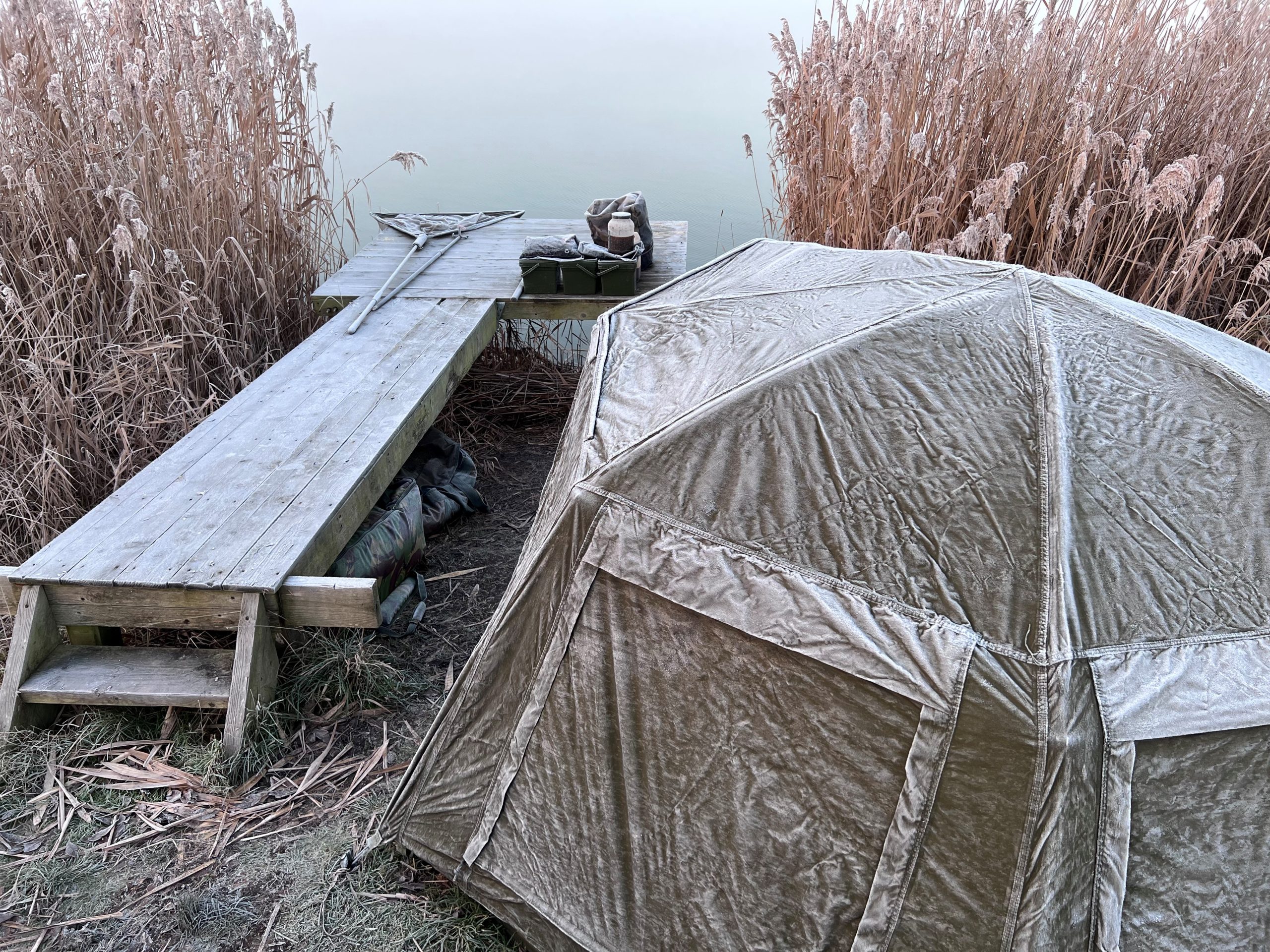
Carp Fishing in Winter: How to Catch Carp in Winter
Winter can be a bleak time of year in many ways, but for me, it has a beauty all of its own. Crisp, frosty mornings, snow falling around the lake and that feeling of the winter sun finally hitting your face after a bitterly cold night – there’s something about winter carp fishing that just makes you feel alive.
I’ve been carp fishing through the winter for more than 20 years and, for me, it remains one of the most rewarding and exciting times of the year to target carp.
Some of you will probably think I’m mad for saying that! However, winter fishing offers a challenge that you simply don’t get at other times of the year. The lakes are quieter, the fish can be harder to find and every bite feels like a genuine achievement.
In this guide to winter carp fishing, I’m going to keep things as simple as possible. From staying warm and locating carp to baiting, rigs, zigs and understanding the weather, these are the things I’ve learned over more than two decades of fishing for carp in cold water.

Winter is one of the most rewarding and exciting times of the year to target carp
STAYING WARM WHEN CARP FISHING IN WINTER
Before we even think about rigs, bait or finding the carp, there’s something far more important to get right: keeping yourself warm.
If you’re cold and uncomfortable, you won’t fish effectively. You’re less likely to watch the water, move swims, recast rods or react to the little signs that can make such a massive difference in winter.
I always layer up, starting with thermal bottoms and tops to keep my core warm. Over those, I’ll wear fleece-lined cargo trousers and a proper Sherpa-style hoodie. A good hood is particularly important when there’s a biting wind whipping around your ears.
For my feet, I wear wool socks and a decent pair of sturdy walking boots. I’ll admit, though, cold feet are something I’ve always struggled with. A hot-water bottle can be an absolute lifesaver when the temperature really drops.
For seriously cold nights, I’ve got an old army Softie jacket that I’ve had for what seems like forever. It’s not glamorous, but it does the job!
And then we get to possibly the most important item of winter carp-fishing equipment of all: the kettle.
You simply can’t beat a lovely hot cup of Rosy Lee on a freezing winter’s day.
I don’t use a heater in my bivvy and whenever I use my stove, I’m very conscious of keeping the bivvy properly ventilated. Never underestimate the dangers of carbon monoxide when using cooking equipment around a bivvy.
Get your clothing and comfort right and you can concentrate on the thing that really matters – finding the carp.

If you stay warm, you’ll fish more effectively
WHY I LOVE WINTER CARP FISHING
One of the main reasons I love carp fishing in winter is the challenge.
Quite often, you can have the entire lake to yourself. Every fish sighting is yours. Every bit of information you gather is yours. There aren’t anglers jumping into swims because somebody has seen a carp show.
For me, that’s about as close as carp fishing gets to genuine hunting.
You have to observe, listen, think and piece together little bits of information. A single carp showing can completely change your winter.
That might sound dramatic, but during the colder months carp will often become much more localised. Find one and there is every chance you’ve found more.
That’s why, above everything else, my number-one winter carp fishing tip is simple:
Find the fish.

A single carp showing can completely change your winter
HOW TO LOCATE CARP IN WINTER
If it’s my first winter on a particular lake, I’ll try to start in an area where I can see as much of the water as possible.
Then I watch.
And I mean really watch.
I’ll also listen, because sometimes you’ll hear a carp show that you never actually see.
This isn’t something I only do when I’m fishing, either. If possible, I’ll visit the lake for a few hours without the rods and simply walk around watching the water.
One show can make an entire winter.
If you can establish an area that carp are regularly visiting or holding in, you’ve immediately given yourself a huge advantage.
SIGNS OF CARP IN COLD WATER
Obviously, a carp jumping or rolling is the biggest giveaway, but don’t wait for one to throw itself clear of the water before you take notice.
There are plenty of subtler signs.
On calm days, watch for lines of bubbles moving through the swim. These can sometimes indicate carp moving higher in the water. Small patches of bubbles appearing in one particular area may suggest fish feeding on or close to the bottom.
Keep an eye on bird activity as well.
Coots can be particularly useful. Sometimes you’ll hear one making a commotion because carp are present, or you’ll see diving birds behaving differently around an area holding fish.
If something doesn’t look quite right, investigate it.
Even if I’m not completely convinced I’ve seen a carp, I may put a rod into the area just to find out. Winter carp fishing is often about following clues rather than waiting for absolute proof.
USE YOUR BITE ALARMS TO LOCATE CARP
Your bite alarms aren’t only there to tell you when you’ve hooked a fish.
Line bites can provide incredibly valuable information in winter.
Where conditions and the swim allow, I’ll sometimes slacken my lines and pay close attention to liners. If I’m receiving line bites between the bank and where my rigs are positioned, that’s telling me there may be carp much closer than I’m actually fishing.
Again, it’s another piece of the puzzle.
You don’t necessarily need a screaming run to learn something.
During the winter, one single beep can be information.
FEEL FOR CARP WITH THE LEAD
This is something else worth considering, particularly when fishing deeper lakes.
You cast out and begin feeling the lead down through the water, but before it reaches the bottom, you feel it bump or knock against something.
Don’t automatically dismiss that.
There is always the possibility you’ve actually hit a carp.
If fish are grouped together in the mid or upper layers, your lead can sometimes clip one as it falls through them.
It’s another reason why paying attention to absolutely everything can be so important when locating carp in winter.
WATCH THE WEATHER
Understanding how your chosen lake responds to different weather conditions can be a massive winter edge.
I’ve fished lakes that definitely seem to respond better to sunny, high-pressure winter days. The sun appears to activate the carp and encourages them to move, making them easier to locate.
On other venues, milder, overcast conditions and lower air pressure seem to produce the better fishing.
There isn’t one weather pattern that’s perfect for every lake.
The important thing is establishing what happens on your water.
That’s why I always recommend keeping records. Over time, patterns begin to emerge and you can start planning your winter carp fishing around the conditions most likely to produce.
WHAT ARE THE BEST WINTER CARP FISHING TACTICS?
I’ve caught winter carp using all sorts of different approaches, including:
- Single hookbaits
- Scattered boilies
- Zigs
- Small amounts of bait
- My normal crushed-boilie-and-pellet mixes
The important thing is not to convince yourself there is only one way to catch carp in winter.
Conditions change and the carp’s behaviour changes with them.
You might need to adapt.
However, that doesn’t mean completely reinventing your fishing every session.
There’s a big difference between responding to what the carp are telling you and constantly changing rigs, hookbaits and tactics because you’re lacking confidence.
My rigs remain relatively simple and I’ll happily use presentations I trust throughout the rest of the year.
If a rig catches carp in summer, it doesn’t suddenly stop working because it’s January.

All manner of tactics will work in winter, like they do at any other time of year
DON’T BE AFRAID TO USE BAIT IN WINTER
There’s often a temptation to think that winter carp fishing means using virtually no bait whatsoever.
That isn’t always the case.
Because lakes are generally much quieter during the winter, you may have an opportunity to establish baited areas without other anglers constantly disturbing them.
If you can keep things relatively quiet and regularly introduce bait to an area, you can sometimes get something going in a swim.
That could mean baiting when you arrive, putting some bait in when you leave or even visiting the lake a couple of days before your next session to introduce some bait.
I’ve had success during winter using my usual mixture of crushed boilies and pellets, as well as more minimal approaches.
Again, let the lake and the carp tell you what is required rather than automatically assuming you can’t use bait because the water is cold.
ZIG FISHING FOR CARP IN WINTER
Zig rigs can be absolutely devastating during the winter because carp don’t necessarily spend all their time sitting on the lakebed.
They will often find a depth at which they’re most comfortable, and discovering that depth can unlock your entire winter.
This is where keeping accurate notes becomes incredibly useful.
Let’s say you’re fishing in 10ft of water and catch a carp on a 7ft zig.
Don’t just write down that you caught it on a 7ft zig.
Think about what that actually tells you.
Your hookbait was approximately 3ft below the surface.
That could be the depth at which the most comfortable layer of water is sitting.
Now imagine you move into an area that’s only 7ft deep. Rather than automatically putting that same 7ft zig back out, you could try fishing approximately 3ft beneath the surface again.
That would mean using roughly a 4ft zig.
You’re not trying to replicate the length of the zig – you’re trying to replicate the depth at which the carp was feeding.
It’s little details like this that can unlock a lake during the winter.
Make a note of the colour of the hookbait as well. If you repeatedly receive bites at a particular depth on a particular colour, you’ve got valuable information that can be applied to the rest of your fishing.
KEEP A WINTER CARP FISHING DIARY
I think keeping records is one of the most underrated things you can do during a winter campaign.
You don’t need anything complicated. Just make notes after each trip.
Record the swims you fished, weather conditions, air pressure if you monitor it, water temperature if you’re checking it, where you saw or heard carp, how much bait you introduced and exactly where you put it.
Most importantly, record your captures.
What did you catch? Where did you catch it? What presentation produced the bite? What was the depth?
If you’re zig fishing, record both the depth of the water and the length of the zig so you know exactly how far beneath the surface the hookbait was positioned.
After weeks or months of doing this, you may begin seeing patterns that you would otherwise have completely missed.
That’s when winter carp fishing becomes really interesting.
KEEP WATCHING – EVEN AFTER DARK
Your eyes and ears are probably your most important pieces of carp-fishing equipment in winter.
Don’t stop looking just because you’ve put the rods out.
And don’t stop paying attention because darkness has fallen.
On a quiet winter lake, sound travels incredibly well. You might hear a carp roll in the darkness and that single piece of information could tell you exactly where you need to be the following morning.
The temptation on a freezing night is to zip yourself inside the bivvy and stay there.
Sometimes that’s unavoidable, but the more information you can gather, the better your chances will be.
Remember: finding the carp is the hard bit. Catching them can often be the easy bit.

Once you’ve found them, winter fishing can be a lot easier than you might realise
MY WINTER CARP FISHING ADVICE
If I had to summarise more than 20 years of winter carp fishing, I’d keep it simple.
First and foremost, make sure you’re warm, comfortable and safe. Winter conditions can be unforgiving, so good clothing and sensible preparation are essential.
Then put as much effort as possible into locating the carp.
Watch the water. Listen for shows. Look for bubbles. Pay attention to bird activity. Take notice of liners and anything unusual you feel when your lead falls through the water.
Use every piece of information available to you.
Keep your actual fishing simple. Don’t start changing rigs and hookbaits every five minutes simply because it’s winter. Stick with presentations and baits you trust, but remain open-minded enough to change your approach when the carp give you a reason to.
Most importantly, enjoy it.
Don’t go winter carp fishing expecting to catch every time, because you won’t.
That’s part of what makes it so rewarding.
In the depths of winter, that one carp showing can feel like a victory. A single beep on the alarms can get your heart racing.
And when everything finally comes together and you slip the net under a proper winter carp, it can feel a hundred times better than catching one at any other time of the year.
That’s why, after more than 20 years of doing it, winter remains one of my favourite times to go carp fishing.